Proyecto metro de doha

The Challenge of Supplying Elastomeric Supports in the Doha Metro

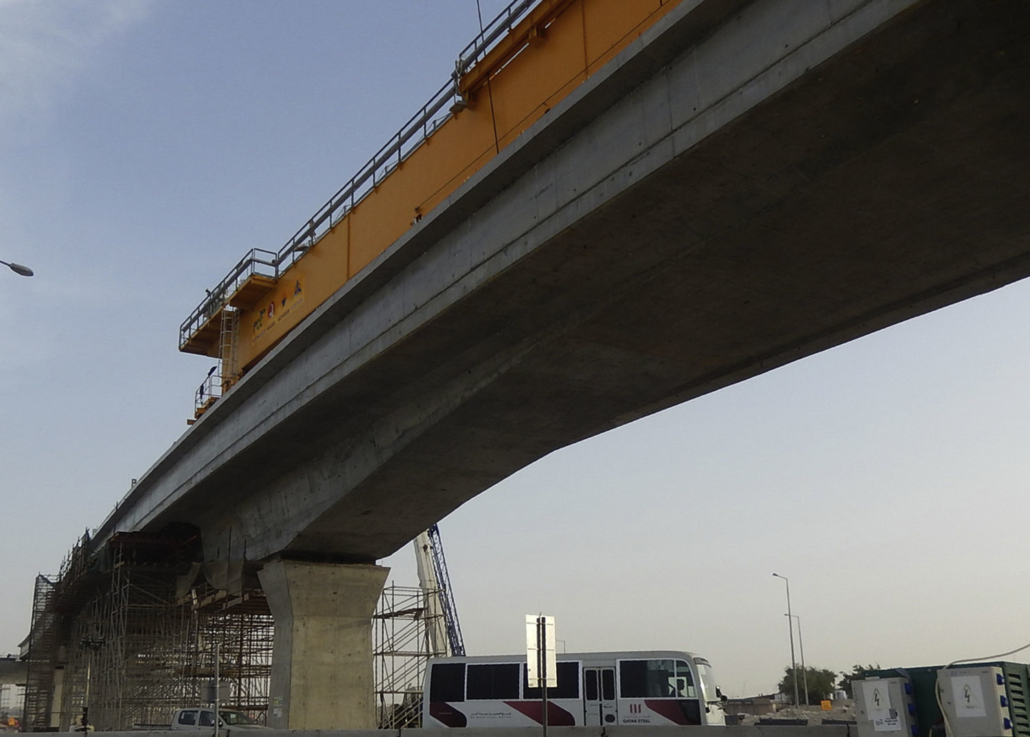
Doha Metro Project. Supports for Qatar Viaducts. In this installment of our technical talks, David joins us again to break down the details of one of Cacesa’s most emblematic projects: the Doha Metro viaduct in Qatar. A project that is celebrating its tenth anniversary and marked a turning point in our international expansion.

Origin of the Doha Metro project: Elevated infrastructure in the Persian Gulf

— Well, today we’re back with David to talk about Cacesa’s clients, the projects they have underway, and we’re going to start with some of the older ones, and then we’ll move on to others that are more recent. For example, today we’re going to talk about three. Today we have this one here in Doha, Qatar. You built a viaduct for the metro. What type of infrastructure is it, and where exactly is this metro located?

— Well, as Pedro says, we’re going to try to explain a little bit about these projects, which are important projects that have given us international recognition we didn’t have before. These projects were built years ago, at the beginning of the growth of the Persian Gulf countries, and to this day, at least ten years later, the elements that were sold at the time are still working perfectly.

So, to begin with, Pedro asks me about the Doha metro, in which, well, the infrastructure that was going to be built was a metro that went above the surface, so it had quite a few pillars that needed support and well, it was a fairly large project.

Technical challenges: Extreme temperatures and specialized rubber

— Regarding this project, do you recall any technical problems? I know you say you struggle with the business side, but we’ll add that when the engineer tells us more. But do you remember any technical issues like very heavy loads, seismic activity, extreme weather conditions with very high temperatures, or complex structural rotations? Is there any aspect of this project that particularly caught your attention?

— Well, the issue of working in high-temperature environments always forces us to use a type of rubber that is more suitable so that it can withstand the temperatures and technical characteristics that the supports have to endure, and so that it withstands them well.

So, the only technical problem I recall is that, defining a specific rubber compound that would work. These supports weren’t overly complex, as they were, if I remember correctly, C-type supports with a single plate where the elastomeric bearing rested, but they weren’t particularly difficult. In other words, what you’ve used here are only elastomeric bearings; there’s no expansion joint, no other product, just elastomeric bearings for this project.

Commercial Management: The connection with Barcelona Engineering

— I’m asking you, how did you get this client? How did they ask you to do something in Doha, a country far from here, that you have to go all the way to Qatar to set up a project? It could have been an American, a European, anyone, I suppose. How did they find you? Why did they choose you? What do they see in your materials that makes them better than others? Or why did they choose you in particular?

— Well, we’ve been working on this project for years to open up a market in the Persian Gulf through our sales team specializing in these countries, but actually, a supplier, an engineering firm from Barcelona, ​​approached us. They were the ones who put the project forward. They contacted us, and well, they decided to choose us. It’s the usual story: quality, service, price, the company’s good reputation, and our years of experience.

Logistics and deadlines in a “pharaonic” work of the Doha Metro Project

— You’ve already mentioned that this project could be there for about 10 years and I don’t know the final result. So, if you could tell me, has it been something special for you, a significant milestone, or is it more or less the same as your everyday work, but done outside your home country, outside of Spain? Or did you have to do anything special within the company itself? Did you have to modify anything?

— Well, from a production standpoint, it wasn’t a challenge, because as I said before, they’re simple supports to manufacture. What was a bit more complicated was meeting the delivery deadlines, which our client in this case was very demanding, because it was a massive project, with a huge number of supports, and they wanted them within a specific timeframe.

So we had to cover the financing, the collections, the payments, and then deliver on time all the supports we had to manufacture. And what’s wrong with this market? Well, precisely when it’s strongest is when everyone is on vacation, which is in August. So planning and organizing the operators’ schedules, the vacations, and serving the customer was more complicated than usual, due to the large number of supports.

The life cycle of supports and monitoring of the Doha Metro Project

— And regarding the follow-up, you tell me that you don’t do maintenance, that you only make the parts, you don’t have anything to maintain, but I don’t know if you have any kind of relationship with the clients, once the works are finished, so that they tell you how the work is going, how everything has gone, or do you simply when your work is finished you give it to the engineering and the engineering takes care of the rest.

—Well, normally when we supply the supports, which are components with a very long lifespan, we don’t track completed projects because we’re almost always the suppliers and not the ones carrying out the work. So, combined with the quantity and the lifespan of the component itself, we tend to lose track of how the projects have progressed. It’s true that we always have a reference project, but we don’t do any real monitoring.

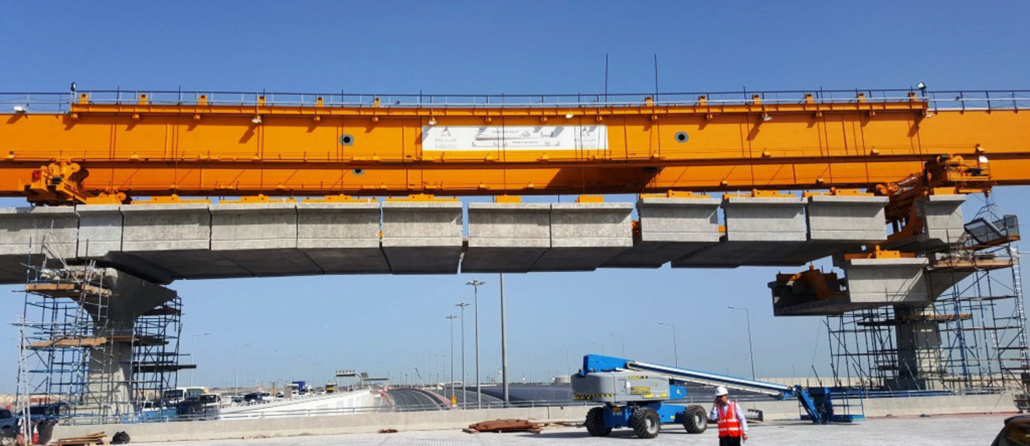
Apoyos elastoméricos del metro de doha

Elastomeric Bearings for Viaducts of the Doha Metro

Elastomeric Bearings for Viaducts of the Doha Metro

The Doha Metro represents one of the most impressive milestones of modern engineering in Qatar. In a project of this magnitude, the choice of elastomeric bearings for the viaducts was no small matter. These components are responsible for absorbing structural movements and ensuring the safety of thousands of passengers daily.

In this article, we analyze how technical specialization and compliance with EN 1337 standards allowed this project to become an international benchmark of success.

The Doha Metro: A road infrastructure of monumental scale

Road infrastructure in the Persian Gulf presents challenges not found in Europe. The design of the Doha Metro, with its long elevated sections, demanded a support system capable of withstanding extreme conditions. Here, elastomeric bearings for viaducts act as the vital link between the decks and the structure’s piers.

Climate challenges at the Qatar viaduct

Building a viaduct in Qatar means subjecting materials to temperatures exceeding 50°C. This temperature range causes constant expansion in the concrete. To address this, a specific rubber compound was developed that maintains its elastic properties under scorching heat, ensuring that the supports do not crystallize or lose load-bearing capacity.

Elastomeric bearings for viaducts

Bridge Engineering: The Science Behind the Type C Bearing

In bridge engineering, the C-shaped bearing is recognized for its reliability. These devices incorporate vulcanized steel plates inside the elastomer, which allows for:

  1. Withstand massive vertical loads: Ideal for heavy rail traffic.

  2. Allow horizontal deformations: Absorbing the effects of the subway’s braking and acceleration.

  3. Compensating for rotations: Crucial when the viaduct crosses curves or uneven terrain.

The use of these elastomeric bearings for viaducts in Doha has shown, after 10 years of use, that durability is the best investment in maintenance.

Compliance with EN 1337 Standard and CE Marking

Safety in mass public transport leaves no room for error. Therefore, every unit manufactured for this project complied with EN 1337. This European standard is the most demanding in the world for structural supports, defining everything from the purity of the rubber to the strength of the steel sheets.

The CE Marking Guarantee

CE marking was a non-negotiable requirement for the Barcelona-based engineering firm that led the bidding process. This certification guarantees that the products have been laboratory tested under shear and accelerated aging conditions. For Cacesa, offering fully certified materials was the key that opened the doors to the Qatari market, giving them an edge over American and Asian competitors.

“Pharaonic” Logistics: Production under pressure

One of the key points of the interview with our technical team was the management of deadlines. In a project of this scale, the volume of elastomeric bearings for viaducts required was immense.

  • Intensive production: Special shifts had to be organized to meet the customer’s delivery dates.

  • Holiday coordination: Much of the manufacturing coincided with the month of August, which required masterful human resource planning.

  • Financing and Collections: An export project requires financial stability to manage cash flows while the material travels to the Gulf.

Gr16

Why does the Doha Metro remain a benchmark?

Today, the Qatar viaduct is an example of how Spanish industry can lead global projects. The key was not just manufacturing a component, but understanding the project’s ecosystem: the engineering needs, the demands of the climate, and the rigor of modern road infrastructure.

The lifespan of these components is extremely long, reducing the need for post-construction interventions. This is vital in elevated viaducts where access for replacing a support is costly and complex.

Conclusion: Quality that crosses borders

The successful supply of elastomeric bearings for viaducts on the Doha Metro confirms that the combination of EN 1337 compliance and logistical adaptability is unbeatable. At Cacesa, we remain committed to technical excellence to support the major infrastructure projects of the future.

Exportación de apoyos elastoméricos y juntas de dilatación

Innovation and Quality in the Export of Elastomeric Supports and Expansion Joints

English Audio:

Audio en Français:


Cacesa and its International Presence and the Export of Elastomeric Supports and Expansion Joints

David, a representative from Cacesa, explains the export of elastomeric bearings and expansion joints, and how the company ensures the quality of its products, especially elastomeric bearings and expansion joints, in international markets. Cacesa works closely with its clients, adapting to the regulations of each country and guaranteeing materials that meet the required standards.

Demand and Export

Cacesa has seen a high demand for its products, especially in regions affected by earthquakes, due to the need to implement anti-seismic systems in buildings. Currently, between 50% and 60% of its sales are made outside Spain, with Mexico and Norway being the most important markets.

Competition and Market

Cacesa faces competition from large European companies such as Freixenet, Mageba, and Maurer. However, the company differentiates itself by its flexibility and rapid response capacity, which allows it to fulfil urgent orders even when the cost of transport is high.

Customer Relations and Quality

Customer feedback highlights the high quality of the product, excellent service and good value for money. Cacesa maintains long-lasting relationships with its customers, who often repeat their orders due to their satisfaction with the performance and attention received.

Market Trends

Cacesa’s sales are influenced by seasonal factors and seismic events. In addition, there is a growing trend towards using neoprene instead of natural rubber, due to its better performance at high temperatures, despite being more expensive.

Challenges and Export Strategies

David mentions the importance of complying with strict regulations in developing countries and the need to maintain high quality standards to avoid problems. Cacesa does not compromise on the quality of its products, even if this means rejecting orders that do not meet its standards.

Innovation and Development

Cacesa is investing in new machinery and is planning to hire qualified personnel to improve its processes and develop new materials that are more durable and less polluting. The company is focused on adapting to market trends and continuously improving its products.

Sales and Marketing Channels

The company gains customers primarily through word of mouth and online visibility. They are increasing their online presence and plan to offer their website in more languages ​​to reach a wider audience.

Conclusion

Cacesa has managed to establish itself as a benchmark in the manufacture of elastomeric bearings and expansion joints thanks to its commitment to quality, flexibility and customer service. The company continues to look for ways to innovate and expand its presence in the global market.

Exportación de apoyos elastoméricos y juntas de dilatación

Cacesa and its Global Focus on Exports and Quality

Cacesa, a company based in Spain, has a solid presence in various international markets. Its main destinations include the European Economic Community, with emphasis on border countries such as Portugal, France, Germany and Italy. They also have a strong presence in Latin America and North Africa, with regular sales in countries such as Morocco, Algeria, and Pakistan.

In terms of customer service, the company manages most of its operations from its headquarters in Madrid, with an export department in charge of management. Although they do not have offices abroad, they offer technical and after-sales support both from Spain and through local representatives in some countries.

Major projects abroad

Cacesa has carried out several important projects abroad, including the installation of expansion joints at the Havana airport and support for the Mayan Train in Mexico, among others.

To guarantee the quality of its products, the company makes sure to comply with the specific regulations of each country, carrying out internal and external tests, as well as audits before shipping the merchandise. In addition, they offer guarantees of durability and compliance with international regulations such as ISO and CE marking.

Adaptive transportation

Regarding logistics and international shipping, Cacesa uses a combination of land, sea and air transportation, adapting to the needs of each client and destination. They also offer flexible payment options, generally in euros, but adapting to the customer’s preferences in terms of payment currency.

In terms of human resources, the company has a team of around 20 employees, with diverse profiles ranging from specialized technicians to office staff. They focus on internal training to develop the necessary skills within the company.

Cacesa strives to maintain high quality and safety standards in all its international operations, adapting to the local regulations of each country and providing personalized technical support to its clients around the world. In addition, they are implementing sustainability initiatives, such as reducing plastic packaging and installing solar panels at their headquarters.

Transformación de las espumas termoplásticas

Transformation of Thermoplastic Foams

English Audio:


Audio en Français:

Thermoplastic foams are versatile materials used in a wide variety of applications, from mattresses and sofas to packaging to protect delicate products during transport. In this summary, we will explore what thermoplastic foams are, how they are manufactured, their common applications, and the most commonly used transformation processes.

What are Thermoplastic Foams?

Thermoplastic foams are vulcanized plastics derived from materials such as polyurethane and polyethylene. These materials are known for their ability to adapt to a wide range of hardnesses and for their versatility in shapes and colors.

Common Applications of Thermoplastic Foams

Polyurethanes are widely used in the manufacture of mattresses, sofas and other products to provide comfort and support. On the other hand, polyethylene stands out in packaging, protecting fragile products such as computers and tableware during transport.

Thermoplastic Foam Manufacturing Process

The manufacturing process of thermoplastic foams involves mixing materials into liquid forms that are then molded using heat in specialized ovens. The versatility of these materials allows the incorporation of a wide variety of additives to obtain different physical and aesthetic properties.

Transformation Processes and Key Factors

Thermoplastic foams are transformed through processes such as cutting, gluing, milling and adhesion to adapt them to specific customer needs. Factors such as density, thickness and measurements are crucial to guarantee the quality of the final product and its suitability for the desired applications.

Advantages of Thermoplastic Foams

Compared to other materials such as rubber, thermoplastic foams offer significant advantages in terms of price, versatility in shapes and colors, ozone resistance, and compliance with food safety regulations.

Useful Life and Anecdotes

The useful life of thermoplastic foams varies depending on the use and care given to them. Although they can last for years in certain applications, their resistance to breakage and durability can be affected by handling and continued use. Some anecdotes include situations where customers received products that were different than expected due to a lack of knowledge about these materials.

In summary, thermoplastic foams are versatile and economical materials that play a critical role in a wide range of industries, from furniture manufacturing to product packaging. Their ability to adapt to various applications and their physical properties make them an attractive option for many companies and consumers.

7600cacesa piezas

Tire Recycling

English audio:


Tire Recycling

Tire recycling plays a crucial role in promoting the circular economy and mitigating environmental impacts. The manufacture of parts from shredded tires presents a series of versatile and environmentally beneficial applications. In a dialogue between David and an interviewer, this process and its various facets are fully explored.

Tire recycling has emerged as an essential component to improve the environment and contribute to the circular economy. David highlights the importance of reintroducing waste into a tire recycling system to obtain new products, which drives environmental sustainability. Tire recycling parts are created from shredded tires, and their application spans a wide variety of sectors.

The advantages of tire recycling

The versatility of tire recycling is manifested in its ability to provide vibration isolation and absorption properties, making it an attractive option in a variety of situations. In addition, other applications are mentioned, such as its use on floors for loading and unloading goods in large areas.

The conversation delves into the advantages and disadvantages of using recycled tire parts. David highlights the economy of this material and its ability to provide a feeling of rest, reduce noise and ensure safety by absorbing impacts. However, it recognizes that cleaning may be more challenging compared to other materials and that there may be a higher concentration of heat outdoors.

Quality controls in the manufacturing process of these pieces are explored. David highlights that tests are carried out in independent laboratories to evaluate the damping capacity, sound absorption and resistance. The durability of the parts is discussed, noting that their useful life depends on factors such as use and proper installation.

Environmental responsibility

The topic of environmental responsibility comes up, and David explains that manufacturers seek to reduce pollution through modern and efficient processes. In addition, it highlights the importance of recycling leftover compact rubber, including those from the factory itself, to contribute to the circular economy.

The conversation then focuses on the rubber recycling process, detailing the manufacturing of rolls, tiles and specific pieces. It is mentioned that the format of the pieces can vary according to the client’s needs, providing flexibility in production.

The competitiveness of recycled rubber compared to other materials is explored. David highlights that there is currently no material that matches the properties of recycled tire chipboard, underscoring its uniqueness and effectiveness in various applications.

The conversation concludes with a look at the type of customers looking for these pieces. David reveals that his main clientele includes distributors and companies dedicated to the construction of playgrounds, gyms and shooting galleries. Additionally, a curious anecdote is shared about a customer who used a roll of compact to create an archery gallery at home.

In summary, tire recycling and the manufacturing of derived parts offer sustainable, versatile and economically viable solutions for various applications, contributing to the circular economy and the preservation of the environment. This process continues to be fundamental in the search for environmentally responsible alternatives in the manufacturing industry.

Caucho esponjoso y topes y defensas

Sponge rubber and bumpers and fenders

English audio:


Sponge rubber and bumpers and fenders

In the interview with David, sales manager at Cacesa, various products focused on sponge materials and protection solutions were explored. The emphasis was on two main categories: closed/semi-closed cell sponge rubbers and compact rubber bumpers/fenders.

  1. Closed and Semi-Closed Cell Sponge Rubbers:

    • Definition and Manufacturing: : Closed cell rubbers do not communicate with each other during vulcanization, offering superior airtightness. Recently introduced semi-closed cells have specific applications, such as in the automotive industry.
    • Fabrication process: Most manufacturers are processors who purchase already manufactured products for further processing. Formulations with peroxides have been used to increase cell volume during vulcanization.
    • Common Applications: Semi-closed cells are ideal for vacuum lifting crane equipment, while closed cells are mostly used in closing metal cabinets, providing insulation and strength.
  2. Test Methods for Closed Cell Sponge Rubbers:

    • No testing is carried out on these materials, as manufacturers provide certificates that meet specific parameters of hardness, density and other tests.
  3. Longevity and Affecting Factors:

    • The durability of sponge rubbers depends on choosing a suitable material for the specific use, considering factors such as density, temperature resistance and tensile strength.
  4. Materials and Trends in Development:

    • Different types of rubber are used, such as nitrile, neoprene and EPDM, depending on the needs. Current trends indicate the entry of alternative materials, such as polyurethane derivatives.
  5. Compact Rubber Bumpers and Bumpers:

    • Definition and Applications: Designed to protect metal structures of vehicles and boats. Bumpers are smaller pieces, while fenders are bulky and technical, used in maritime and cargo environments.
    • Materials and Key Features: Approved EPDM rubber mixtures are mainly used to guarantee resistance to breakage, ozone and durability.
    • Installation Installation varies; Stops for trucks are simpler and are fixed with screws, while in ports specialized installation and approval are required.
    • Advantages: Protection of load-bearing structures, shock absorption and lower repair cost compared to direct damage to structures.
  6. Clients and Market:

    • The main clients are trailer manufacturers, truck parts companies and those related to the manufacture of bumpers and fenders. Examples of clients include Adaico and Kingom
  7. Regulations and Product Quality:

    • The products comply with specific regulations, and traceability is ensured through ISO certificates. The fenders and stops usually come with factory tests, validating their properties.

In summary, Cacesa stands out for its focus on sponge materials and protection solutions, adapting to the needs of the market and maintaining high quality standards in its products.

Cacesa sobre nosotros laboratorio

What does CACESA do?

English audio:


If you want to listen to David, CACESA sales manager, explain how to work in a rubber factory dedicated to manufacturing compact and spongy rubber parts. Listen to this recording and the following ones

What does CACESA do?

Good morning. Today we are here recording this program with David de Casesa. Tell us, David, what is your position at Casesa. What do you do for a living?

Hello good morning. My position is general administrative manager and sales manager. We are dedicated to manufacturing compact rubber and sponge rubber articles.

Within everything that Casesa does, which are many, I am going to count them a little above and leave them like this, which are:

What are elastomeric supports? For someone who doesn’t understand anything about these terms

Consult the information in text about elastomeric supports